How to Make a Study Guide That Actually Works (Without Rewriting the Textbook)
Most students build study guides by copying out slides and highlighting paragraphs. Here is a five-step method to turn messy class material into an active study guide that gets you ready for exam day.
 Sarah Chen
Why most study guides feel useful but do not help on tests
Almost every student has spent a Sunday afternoon building what looks like a masterpiece: a twenty-page document with color-coded headings, neat bullet points copied straight from lecture slides, and passages lifted from the textbook.
By the time you finish typing, your hands hurt and you feel like you have done serious work. But when you sit down for the exam three days later, you stare at a question and realize you cannot remember how the pieces fit together.
The problem is that compiling notes is clerical work, not memory work. When you copy sentences from a slide into a document, your eyes scan the words and your fingers type them, but your brain never has to retrieve the information on its own. Everything makes sense while you type it because the answer is right in front of you.
Cognitive psychologists call this the illusion of competence. Looking at familiar words makes you feel like you know them. The test, however, does not ask you to recognize an explanation. It asks you to produce one with a blank page in front of you.
What a good study guide actually does
A useful study guide is not a summary you sit back and read. It is a testing machine.
Instead of writing down answers, a good guide organizes prompts, questions, and problems that force you to pull facts out of your memory. Every section should present you with a challenge:
- Can you define this mechanism without checking your notes?
- Can you solve this problem type without looking at the step-by-step example?
- Can you explain why one formula applies here instead of another?
When your study guide asks questions instead of feeding you answers, reviewing becomes active practice rather than passive skimming.
Passive summaries vs. active study guides
Here is how a traditional review sheet compares to an active study guide:
| Feature | Passive summary | Active study guide |
|---|---|---|
| Primary format | Copied bullet points and textbook quotes | Questions, cues, and problem prompts |
| How you use it | Re-reading and highlighting lines | Covering the answers and testing recall |
| Time investment | 80% typing and formatting | 20% structuring, 80% self-quizzing |
| What it reveals | Recognition of familiar phrases | True ability to retrieve and apply ideas |
The five steps to build an active study guide
If you want a study guide that actually prepares you for tests, follow this five-step sequence.
1. Gather your materials and cut the noise
Before you write anything, gather your primary sources: syllabus learning objectives, lecture slides, homework problem sets, and assigned readings.
Do not try to include every single sentence your professor said. Instructors often spend ten minutes on introductory banter or secondary historical anecdotes that will never appear on an exam. Look at the syllabus objectives first. If a topic is not tied to a learning objective or an assigned problem set, leave it off the guide.
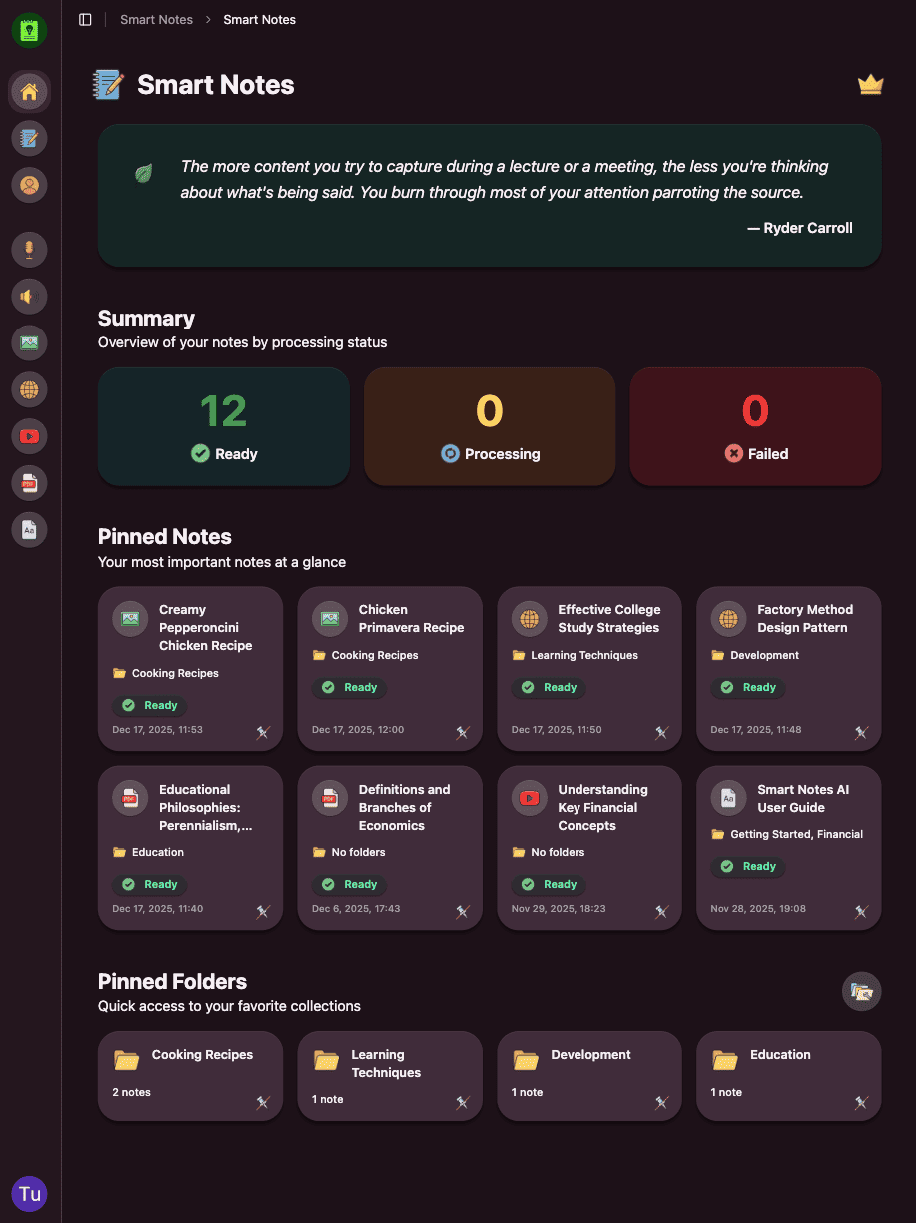
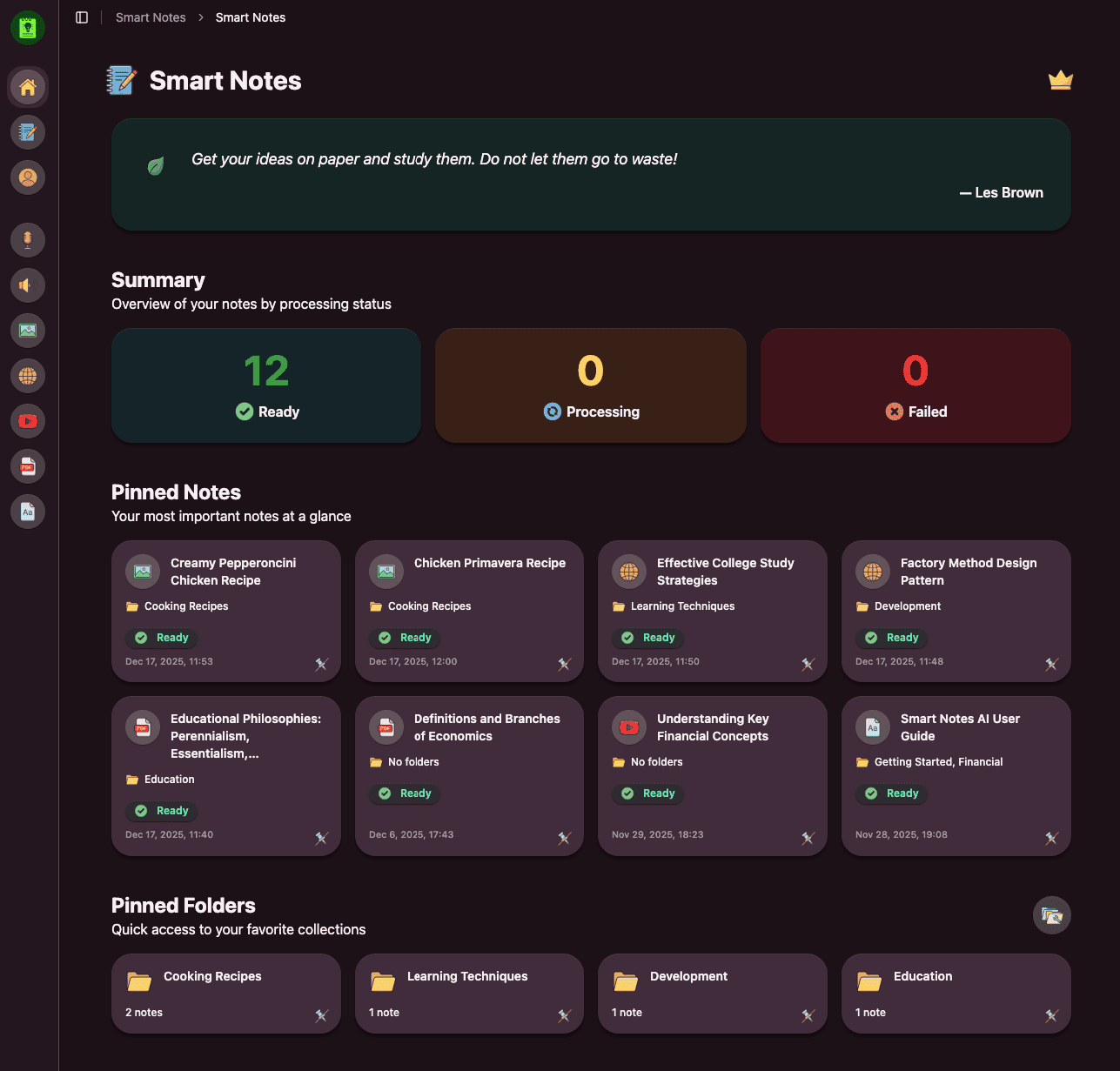
If you have piles of slide decks or long readings, copying them out manually eats up hours of study time. You can use tools like MasteryAI to pull structured outlines from textbook PDFs or recorded classroom lectures. That handles the initial sorting so you can focus on working through the actual concepts.
2. Turn your headings into questions
The single most effective change you can make to your notes is replacing topic titles with direct questions.
Instead of writing a heading like:
Photosynthesis: Light-dependent reactions
Write:
What inputs enter the light-dependent reactions, and what two molecules do they produce for the Calvin cycle?
Instead of:
Supply and Demand: Elasticity
Write:
Why does demand for luxury goods tend to be more price-elastic than demand for necessities?
When you sit down to review, your eyes cannot simply glide over the heading. The question forces your brain to search for an answer before you read the note underneath.
3. Explain the mechanism in plain words
When you write the answer below each question, do not copy the formal academic definition verbatim. Formal definitions are easy to memorize without understanding what they mean.
Use the Feynman learning method: explain the concept in simple, everyday language as if you were explaining it to a friend who is not in the class. If you are describing an electrical circuit, compare it to water flowing through pipes. If you are describing database indexing, compare it to the index in the back of a book.
If you notice that you cannot explain an idea without relying on jargon you do not fully understand, that is your signal to revisit the textbook or re-watch that specific section of the lecture.
4. Convert hard facts into flashcards and mini-quizzes
Some material requires exact recall rather than conceptual explanation: anatomical terms, vocabulary words, chemical formulas, and historical dates.
Putting long lists of definitions on a single printed sheet makes it hard to test yourself because your eyes naturally wander to the answer. Instead, move these items into active recall flashcards or practice quizzes.
Testing yourself with flashcards gives you immediate feedback on what you know versus what you guessed. It also allows you to shuffle the deck, which prevents your brain from relying on the order of items on a page as a memory crutch.
5. Test before you re-read
When you open your study guide for a review session, resist the urge to read through the answers first.
Cover the answers with a piece of paper or collapse the digital toggles. Go through each question one by one, and write down your answer on scrap paper or say it out loud. Only uncover the answer after you have committed to an attempt.
If your answer was correct, mark it with a small checkmark. If you missed key steps or got stuck, put a circle next to it. When you review tomorrow, start directly with the circled questions. This directs your attention toward your weak spots instead of repeating the material you have already mastered.
How to study when you only have short breaks
Many students believe they need an empty calendar and a four-hour block in the library to get any studying done. In practice, long blocks of passive study often lead to phone scrolling and fatigue.
Short, distributed review sessions are much easier to stick to and produce better retention. Having your notes and practice questions accessible on your phone through the Study Hub means you can review a deck of ten questions while riding the bus, check your daily streak, or practice in a lecture hall five minutes before class starts.
Three fifteen-minute retrieval sessions spread across the day often help you remember more than one forty-five-minute cram session late at night.
Frequently asked questions about study guides
How early should I start making a study guide?
Build your guide incrementally each week rather than starting the weekend before the exam. Adding three to five questions after each lecture keeps the task manageable and means your review material is ready when midterm week arrives.
Should my study guide be typed or handwritten?
Handwriting can aid memory during the initial drafting phase, but digital study guides are much easier to search, update, and reorganize. A good compromise is creating your outline digitally, then handwriting your answers on blank paper during your active recall practice sessions.
How long should an effective study guide be?
An active study guide should be concise. If your guide is sixty pages long, you have simply rewritten the textbook. Aim for a condensed set of high-yield questions, formulas, and diagrams that you can run through completely in one or two study sessions.
Ready to learn faster?
Paste any YouTube URL, upload a PDF, or record a lecture and get structured AI notes in seconds.