The Note-Taking Trap: Why Collecting Notes Is Not Learning
Building complex folder hierarchies and saving hundreds of articles feels productive, but rarely helps you remember anything. Here is how to move from digital hoarding to actual synthesis.
 David Vance
The problem with digital hoarding
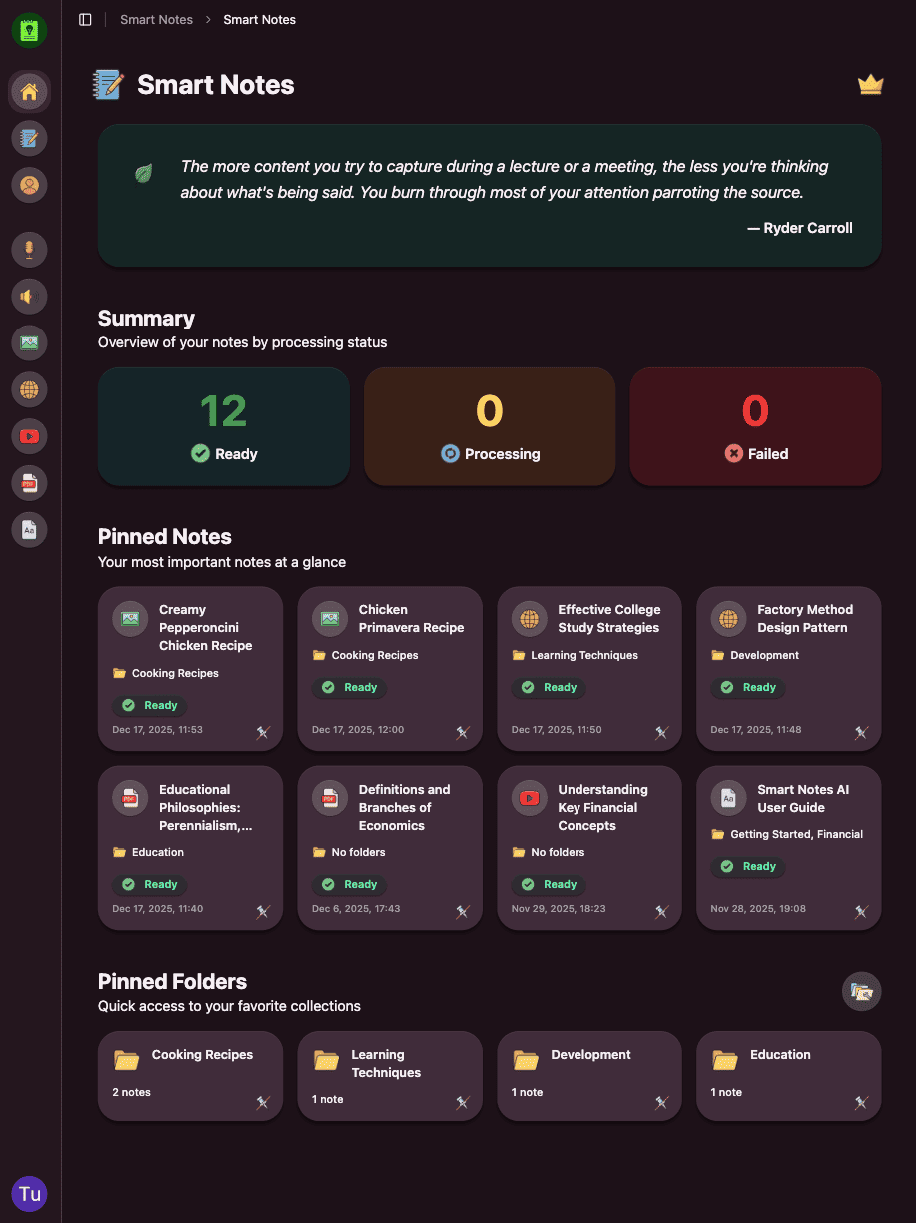
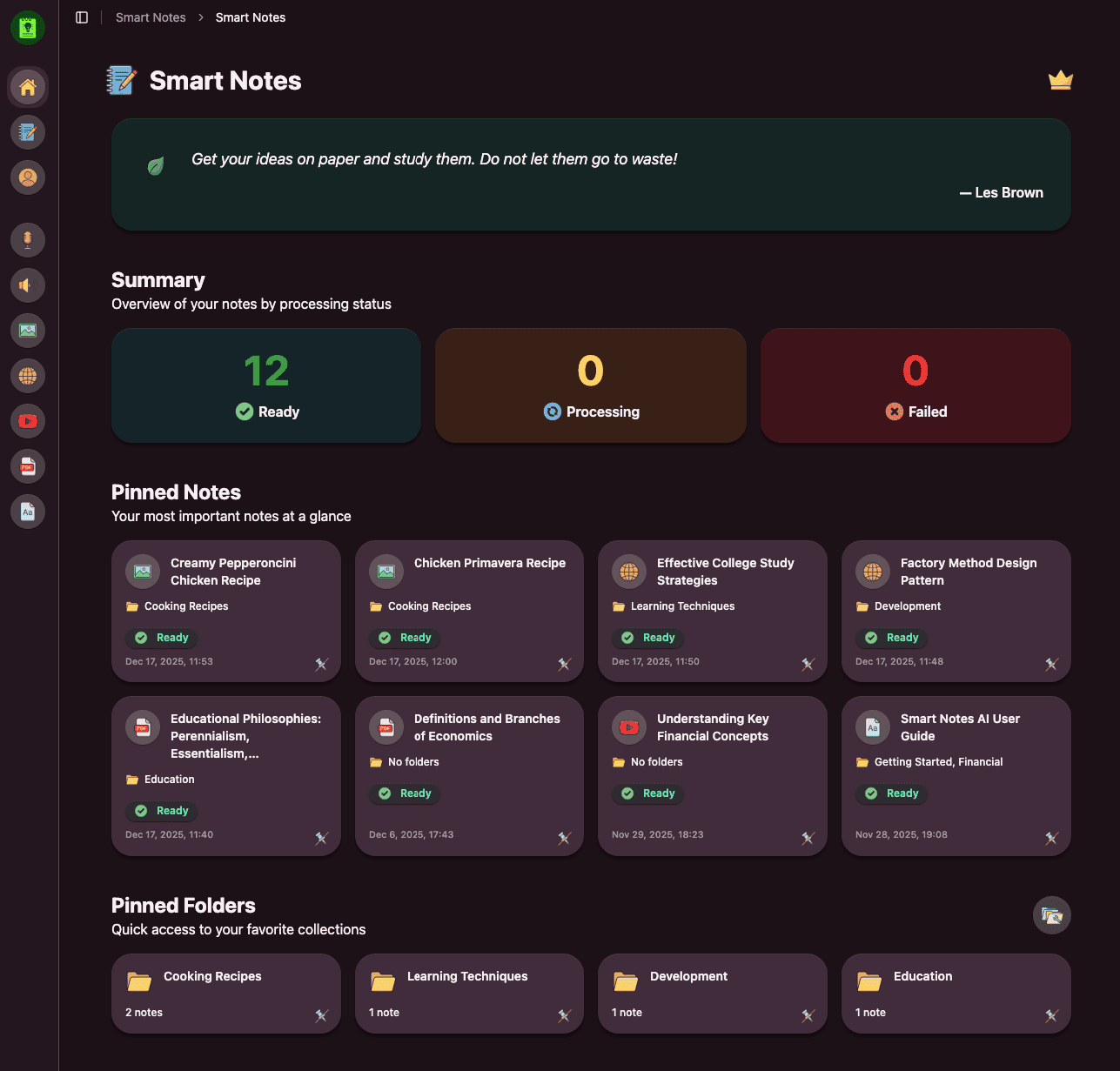
Many people spend their evenings bookmarking articles, clipping web pages, and highlighting paragraphs across dozens of PDFs. Their folders multiply, their tagging systems grow more elaborate, and their digital notebook archives look impressive.
Yet when they sit down to write an essay, prepare for a client presentation, or take a midterm exam, the knowledge is nowhere to be found.
This disconnect is known as the collector's fallacy. Saving an article triggers a brief feeling of accomplishment. The brain treats the act of filing as equivalent to understanding, confusing possession with comprehension. But saving a PDF to your drive or bookmarking a video does not mean the ideas inside have been integrated into your memory.
Digital hoarding vs. active synthesis
Here is how passive collection compares to active synthesis:
| Metric | Digital hoarding | Active synthesis |
|---|---|---|
| Primary activity | Clipping, bookmarking, and tagging folders | Testing recall and connecting ideas |
| Time spent | 80% on file organization and system maintenance | 80% on problem solving and self-quizzing |
| Mental outcome | False sense of competence | Deep comprehension and retention |
| What you produce | An unread archive of bookmarks | Original arguments, summaries, and solutions |
Why personal knowledge management systems fail
When you collect without processing, the ratio of noise to useful insight increases steadily. Over time, your knowledge base becomes an intimidating archive that you avoid opening.
This dynamic creates maintenance fatigue:
- You spend Sunday mornings organizing nested tags and adjusting folder hierarchies instead of reading.
- Your backlog of unread bookmarks becomes a source of guilt rather than a useful resource.
- When you search your database, you find dozens of isolated highlights with no context explaining why they mattered.
Organization without synthesis is clerical work. If a note system requires hours of maintenance to remain useful, it eventually gets abandoned.
How to escape the collection trap
To retain what you read and generate original ideas, your workflow must prioritize retrieval over storage.
1. Set an immediate reading threshold
If an article or paper is genuinely important, spend five uninterrupted minutes reading its core argument right away. If it is not worth five minutes of focused attention right now, do not file it into an endless reading list. Delete it or close the tab. Limiting what enters your system prevents digital clutter before it starts.
2. Connect new ideas visually with mindmaps
Do not store isolated notes. When you save a summary, link it to concepts you already understand. Using visual tools like a mindmap makes conceptual relationships visible. Seeing how a new finding connects to foundational ideas helps you evaluate whether it supports, refines, or contradicts your existing mental models.
3. Apply the plain-language test
Before you file a note, try explaining its main point in two or three simple sentences without looking at the source text. If you struggle to state the thesis in plain words, you have not grasped it yet. Revisit the source text to clear up ambiguities before adding it to your archive.
Automating extraction to protect your thinking time
The purpose of study software is to remove mechanical busywork so you can focus on understanding.
Tools like MasteryAI handle the initial extraction work: they turn lengthy PDF documents, web articles, and raw lecture recordings into structured outlines within seconds. Taking care of the formatting stage allows you to move directly into evaluation:
- Track your daily study streak and due cards in the Study Hub, keeping your attention on what needs practice rather than maintaining complex folder hierarchies.
- Test your understanding with Feynman Live AI sessions, where you explain concepts out loud to identify gaps in your grasp of the topic.
- Map conceptual hierarchies visually with mindmaps so you can track how foundational principles relate to specific case studies.
- Convert key concepts into spaced repetition flashcards and self-testing quizzes that you can review on your phone during daily commutes.
The balance between capturing and thinking
A useful guideline is to spend roughly twenty percent of your study time capturing and formatting notes, and eighty percent testing, connecting, and applying what you learn.
When note systems invert that ratio, they turn into digital scrapbooks. Focus on what you can explain and apply. A small collection of deeply understood ideas will always serve you better than gigabytes of unread archives.
Frequently asked questions about note taking systems
How do I stop hoarding articles I will never read?
Adopt a strict one-in, one-out rule. When you find an interesting article, read the introduction and conclusion immediately. If it does not contain information you need for a current project or class, close it without saving.
How often should I review my notes?
Review your notes through active recall, not re-reading. Run through smart flashcard prompts or answer practice quizzes once or twice a week. Testing your recall every few days creates spaced repetition, which moves facts from short-term memory into long-term retention.
Are digital folders better than tags?
Simple structures beat elaborate systems every time. One broad folder per class or project with clear document titles is easier to maintain than three levels of nested tags that require constant sorting.
Ready to learn faster?
Paste any YouTube URL, upload a PDF, or record a lecture and get structured AI notes in seconds.